
By Andre Mazerolle
Summary: Variable Valve Timing lets a Harley engine automatically adjust how it breathes so it runs smoother, pulls harder when needed, and wastes less fuel—no matter how you ride.
Variable Valve Timing (VVT) in a Harley-Davidson motorcycle is basically a smart way for the engine to adjust how it breathes, depending on how you’re riding—without you doing anything.
Here’s a simple way to think about it 👇
The simple analogy
Imagine your engine is a person breathing:
- At low speeds (cruising, city riding), it takes slow, calm breaths
- At high speeds (hard acceleration, highway passing), it needs deep, fast breaths
VVT lets the engine change its breathing style automatically so it’s always comfortable and efficient.
What valves normally do
Inside the engine:
- Intake valves let air and fuel in
- Exhaust valves let burned gases out
On older engines, these valves open and close the same way all the time, no matter how fast you’re riding.
What VVT changes
With VVT, Harley’s engine can:
- Open valves earlier or later
- Keep them open longer or shorter
It adjusts this on the fly, based on:
- Engine speed (RPM)
- Throttle input
- Load (how hard the engine is working)
What this means for you as a rider
In real-world terms, VVT gives you:
- Better low-RPM torque → smoother takeoffs and cruising
- Stronger top-end power → better passing and highway pulls
- Improved fuel economy → the engine doesn’t waste effort
- Lower emissions and heat → important for modern Harley engines
Why Harley-Davidson uses it
Harley-Davidson wants engines that:
- Still feel torquey and “Harley-like”
- Meet modern emissions rules
- Run cooler and more efficiently
VVT helps them do all three without changing how the bike feels to ride.
Bottom line
Variable Valve Timing lets a Harley engine automatically adjust how it breathes so it runs smoother, pulls harder when needed, and wastes less fuel—no matter how you ride.
2026 Harley-Davidson motorcycles that are confirmed to have Variable Valve Timing (VVT)
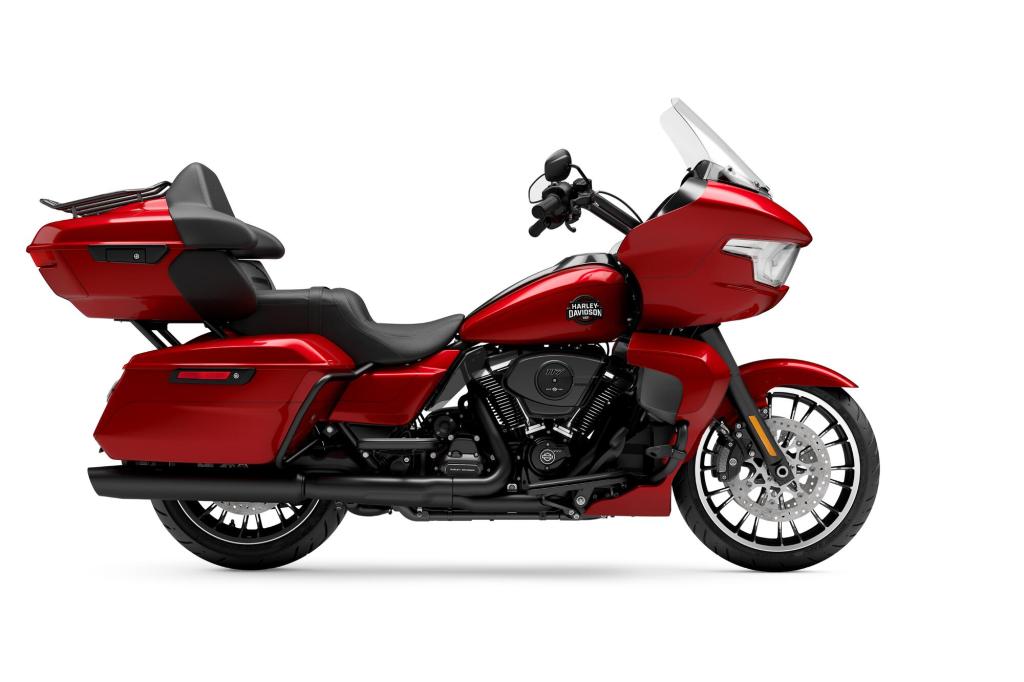
1. Street Glide Limited & Road Glide Limited
- Powered by the Milwaukee-Eight VVT 117 engine, which includes variable valve timing to broaden the powerband and improve efficiency.
2. Street Glide 3 Limited & Road Glide 3
- Also equipped with the Milwaukee-Eight VVT 117 engine featuring variable valve timing.
3. CVO Models with VVT 121
In 2025 the CVO Street Glide and CVO Road Glide featured VVT. In 2026, Harley-Davidson did not release a CVO Road Glide so only the following CVOs have VVT:
- CVO Street Glide
- CVO Street Glide Limited
- CV0 Street Glide 3 Limited
Harley-Davidson’s Revolution Max engine uses Variable Valve Timing (VVT)
🏍️ Revolution Max 1250 & VVT
- The Revolution Max 1250 engine found in models like the Pan America, Sportster S, Nightster S, and similar uses computer-controlled Variable Valve Timing on both the intake and exhaust camshafts.
- This VVT system can advance or retard valve timing up to about 40° of crankshaft rotation, which helps broaden the engine’s usable powerband — giving stronger low-end torque and good high-rpm power while improving efficiency and rideability. (Motorcycle.com)
Why VVT is included on Revolution Max
Because the Revolution Max is a DOHC (Dual Overhead Cam) engine with four valves per cylinder, it’s well-suited to VVT. Harley designed it this way to:
- Improve torque across a wide rev range
- Boost responsiveness and power delivery
- Enhance fuel efficiency and emissions performance
All of that is managed dynamically by the engine control computer. (Motorcycle.com)
Note on Other Revolution Max Variants
- Some smaller Revolution Max variants (like the 975T) may only have VVT on the intake side, not both intake and exhaust.
This article is written with the assistance of AI using ChatGPT.com. The information, opinions or views expressed are those of the author and do not necessarily reflect the views of Durham Harley-Davidson.

 Andre Mazerolle